
What does it take to build a Catholic school where every student and every family feels they belong?
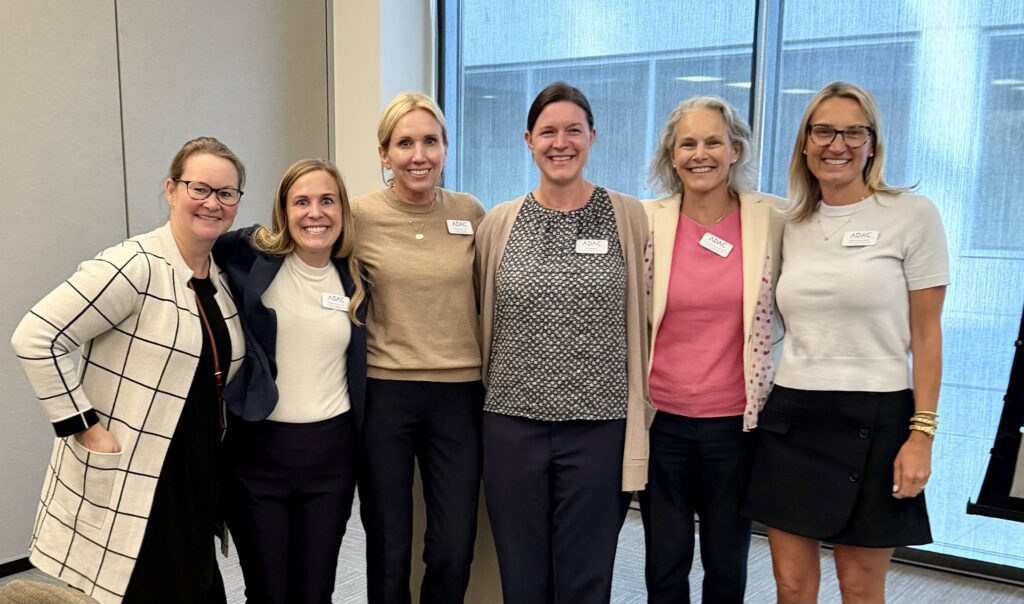
That question brought 140 Catholic education leaders from dioceses and schools across the country to the Cathedral of Christ the Light in Oakland on June 18 for Anchored in Faith: Charting Pathways to Inclusion, co-hosted by ADAC and the National Catholic Educational Association (NCEA). Principals, diocesan leaders, teachers, learning specialists, and advocates gathered with a common purpose. They already understood the importance of inclusion. They came together to strengthen the leadership practices, instructional frameworks, partnerships, and systems that allow Catholic schools to better serve all learners and support their families.
Throughout the day, participants shared ideas, challenged one another’s thinking, celebrated successes, and explored practical solutions to the real challenges schools face as they expand inclusive opportunities. The result was a day filled with optimism, collaboration, and a renewed commitment to ensuring that every child is known, valued, supported, and able to thrive.
Centering Inclusion on Human Dignity
The Summit began with an inspiring keynote from Beth and Patrick Foraker. Rather than simply talking about inclusion, Patrick shared his own educational journey, reminding participants that every student has unique gifts to contribute when schools intentionally create opportunities for belonging. His story set the tone for the day by placing human dignity at the center of every conversation.
Participants left inspired. One attendee wrote, “Thrilled to see this finally happen in our schools! We need top-down support to make this happen. Train the administrators so we can move forward and change the culture!” Another reflected, “Inclusion is not just talking about Patrick, but allowing Patrick to speak for himself and share about his journey personally.”
The learning continued through a series of interactive workshops that explored some of the most pressing topics facing Catholic schools today. Sessions addressed strong Tier 1 instruction, Multi-Tiered Systems of Supports (MTSS), middle- and high-school inclusion, admissions practices, sustainable funding through IDEA and ESSA, artificial intelligence, biblical social-emotional learning, and leadership for systems change. Participants consistently praised the workshops for being practical, relevant, and immediately applicable to their schools. Many described the sessions as “Outstanding,” “A HUGE resource for all educators,” and “Amazing,” while several requested additional workshops to continue the learning.
Collaboration That Turned Ideas into Action
One of the highlights of the day came during the Guided Conversation Circles. Around twelve facilitated tables, leaders from across the country shared ideas, discussed challenges, and learned from one another’s experiences. Rather than focusing on abstract concepts, each group identified practical strategies that schools could begin implementing immediately. The conversations demonstrated that while every school’s journey is unique, many are navigating similar opportunities and challenges.
Several themes emerged across the discussions.
Participants agreed that strong Tier 1 instruction is the foundation of inclusion. High-quality instruction, clear routines, executive functioning supports, formative assessment, and student choice create classrooms where more students succeed from the very beginning. Leaders recognized that many of the most effective inclusive practices are already known. The challenge is implementing them consistently across classrooms and schools.
Another recurring theme was the importance of leadership and culture. Participants acknowledged that the greatest barriers to inclusion are often not funding or facilities, but mindset. Building an inclusive school requires leaders who communicate a clear vision, invest in professional learning, foster collaboration, and partner closely with families. Schools that intentionally cultivate these conditions create environments where both students and educators flourish.
Innovation also emerged as an important part of the conversation. Workshops exploring artificial intelligence challenged educators to think about technology as a way to increase access, personalize learning, and reduce barriers while always keeping teacher expertise and relationships at the center. Participants emphasized that innovation should enhance human connection, not replace it.
Perhaps the strongest message of the day centered on belonging. Whether participants were discussing admissions, instructional practices, funding, social-emotional learning, or leadership, they returned repeatedly to the idea that belonging does not happen by accident. It is intentionally created through school culture, daily routines, meaningful relationships, and a shared commitment to recognizing the dignity of every child. As one Guided Conversation Circle summarized, “Inclusion creates this environment. Belonging is not a byproduct. It must be designed.”
Building the Future of Catholic Education
As the Summit concluded, participants left Oakland with far more than presentation materials and handouts. They returned to their schools with new professional relationships, practical strategies, innovative ideas, and renewed confidence that they are part of a growing national community committed to strengthening Catholic education for every learner.
The conversations that began at Anchored in Faith will continue long after the Summit ended. Across dioceses and schools, leaders are taking the next steps to build stronger systems of support, deepen partnerships with families, and create learning communities where every student is welcomed, challenged, and given the opportunity to flourish.
That is the promise of Catholic education, and it is the future these leaders are working together to build.